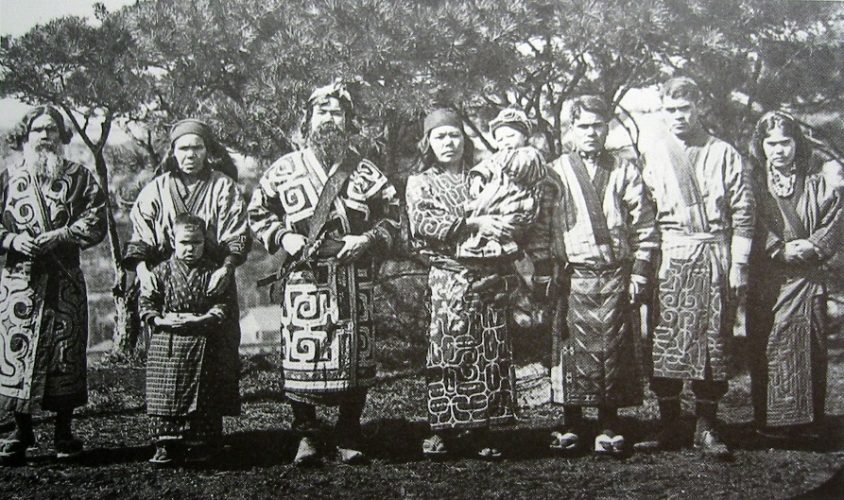
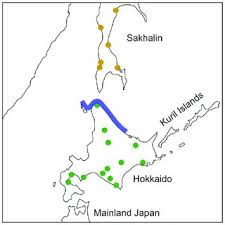
Ainu is spoken on the northern Japanese island of Hokkaido. It was once spoken in the Kuril Islands, the northern part of Honshu and the southern half of Sakhalin. The last Ainu speaker on Sakhalin died in 1994. Ainu is a language isolate, unrelated to any other language. In 2008 there were just two native speakers of Ainu. A small number of people are learning it as a second language as well.
The vast majority of the 150,000 people who claim to be ethnically Ainu speak only Japanese. The actual number of people of Ainu descent is thought to be higher, however many are unaware of their ethnicity or deny it through fear of discrimiation.
Efforts are being made to revive and revitalise Ainu. These include the documentation of oral literature, the production of teaching and learning materials, language classes and training for teachers of Ainu. There are some Ainu programs on the radio, an the magazine the Ainu Times (アイヌタイムズ) is published in Ainu four times a year.
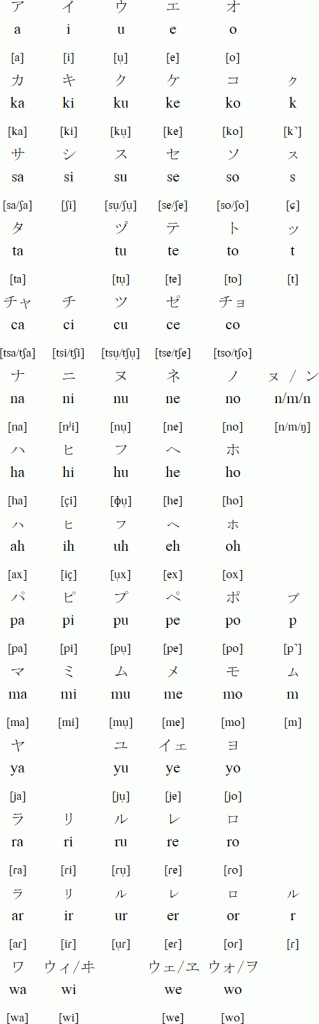
Ainu is officially written with a version of the Japanese katakana syllabary. A Latin-based alphabet is also used. The Ainu also have a rich oral tradition, including Yukar (sagas of heros), Kamui Yukar (stories of the gods) and Uwepeker (old stories).
In 2019, the Japanese government officially recognized the Ainu language for the first time.
 Endangered Voices Initiative